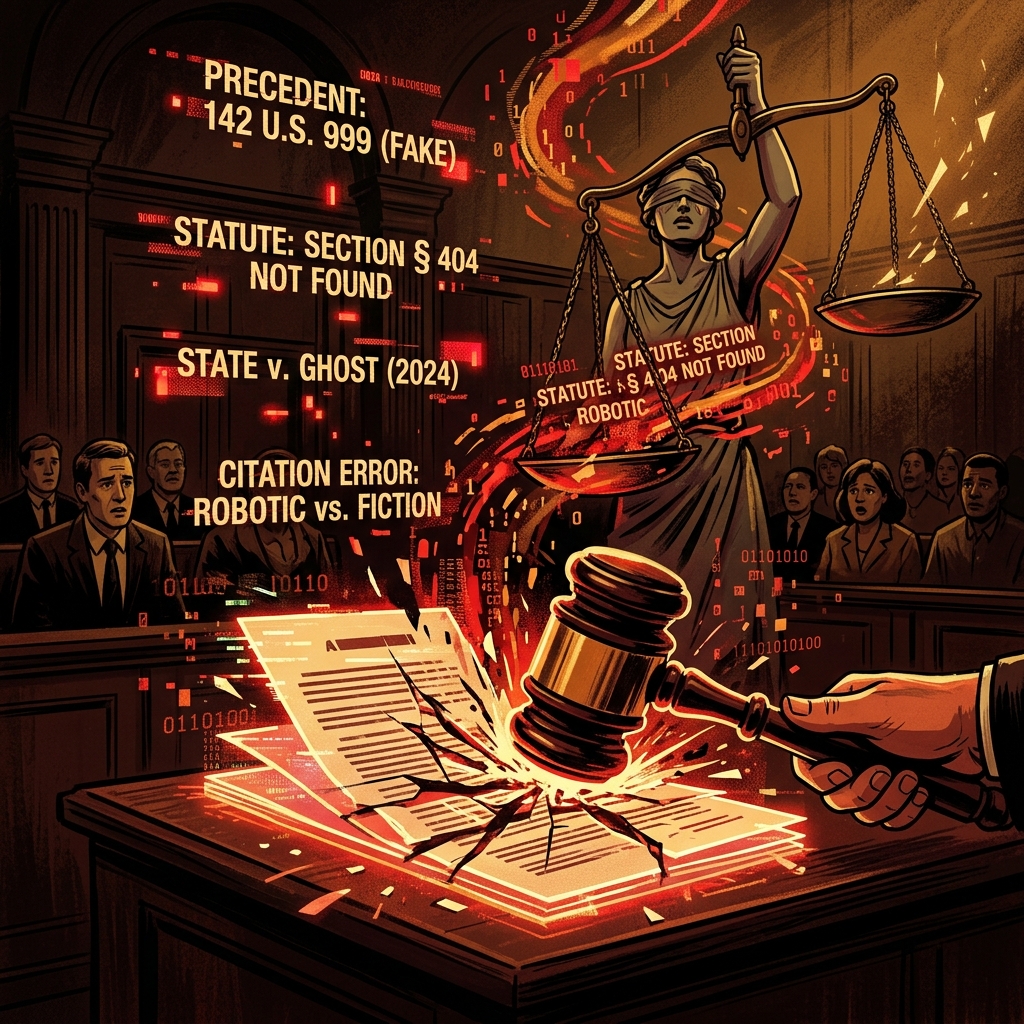
The legal profession’s AI hallucination crisis has reached a new inflection point. Tracking databases now catalog over 1,300 worldwide cases of AI-generated fabricated citations, phantom case law, and false quotes in court filings — with more than 900 occurring in U.S. courts alone.
The Scale of the Problem
What began as isolated incidents in 2023 has become a systemic issue:
| Metric | Count |
|---|---|
| Worldwide cases tracked | 1,300+ |
| U.S. court cases | 900+ |
| Maximum sanctions imposed | $100,000+ |
| Courts issuing structured per-citation fines | Growing |
Escalating Judicial Response
Courts have moved from surprise and leniency to systematic punishment:
- Monetary Sanctions: Federal courts have imposed fines ranging from thousands to over $100,000 for filings containing fabricated research
- Per-Citation Fines: Some courts have adopted structured penalties — specific dollar amounts per fake citation or fabricated quote
- Ethics Training: Mandatory AI ethics and verification training for sanctioned attorneys
- Bar Referrals: Attorneys being referred to state bar associations for disciplinary proceedings
- Show-Cause Orders: Judges requiring attorneys to explain why they should not be sanctioned after AI-generated errors are discovered
Key Legal Precedents
Several rulings in 2026 have established important principles:
- Non-Delegable Verification Duty: Courts consistently hold that lawyers bear an absolute duty to verify every citation, regardless of what tool produced it
- No AI Privilege: In United States v. Heppner, a federal court ruled that communications with public AI platforms are not protected by attorney-client privilege or work product doctrine
- Signing Attorney Responsibility: Blaming staff, associates, or “discarded search tools” does not mitigate liability — the signing attorney is accountable
Even Big Law Isn’t Immune
Major law firms with substantial resources have been flagged for AI-generated errors, demonstrating that the problem isn’t limited to solo practitioners or small firms. The risk is structural and tool-dependent, not a function of firm size.
Best Practices Emerging
Legal professionals are increasingly adopting defensive protocols:
- Mandatory three-layer verification: AI output → attorney review → verified database cross-reference
- Transparency with courts: Disclosing AI usage can serve as a mitigating factor
- Formal AI use policies: Firms implementing written guidelines for acceptable AI-assisted research
- Independent database validation: Every citation checked against Westlaw, LexisNexis, or official court records
Why It Matters
The legal hallucination crisis is the most visible, highest-stakes example of AI reliability failures affecting a regulated profession. As AI tools become embedded in legal workflows, the gap between AI-generated confidence and factual accuracy creates real-world harm — from wasted judicial resources to potential injustice for litigants.
For the broader AI industry, it’s a cautionary tale: professional AI tools require professional-grade verification, and the cost of hallucinations is measured in careers, sanctions, and institutional trust.