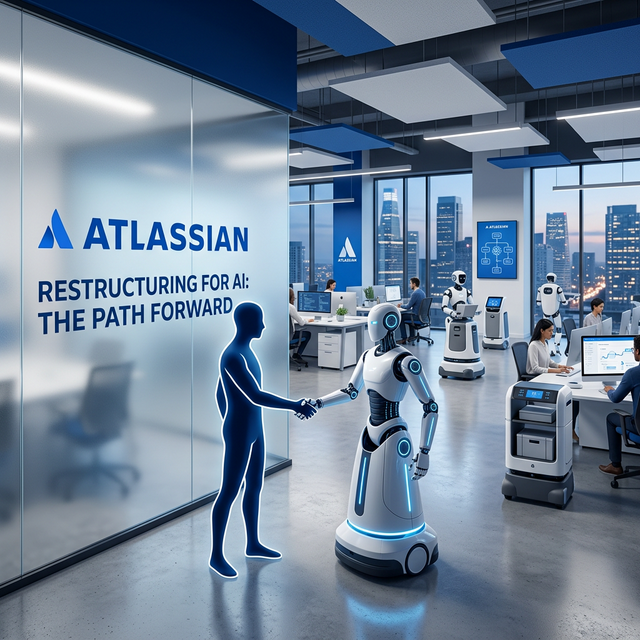
Atlassian, the company behind Jira, Confluence, and Trello, has confirmed layoffs as part of a deliberate strategic reorientation toward AI. The cuts are not the result of financial distress — they are a direct investment signal: capital and headcount are being redirected to accelerate AI-native product development.
What Atlassian Is Doing
The company has been integrating AI across its product portfolio under the Atlassian Intelligence brand. The new push goes further, with the firm explicitly stating it is restructuring teams to dedicate more resources to building AI features into core workflows.
The affected roles span engineering, operations, and support — areas the company believes can be increasingly automated or superseded by AI tooling.
The Bigger Pattern
Atlassian is far from alone. Across enterprise software, companies are making the same calculation:
- Fewer engineers building and maintaining legacy systems
- More investment in AI that can generate, test, and ship code autonomously
- AI agents handling customer support, documentation, and project management tasks that once required large teams
The math is stark: if an AI agent can handle a task previously requiring five employees, those headcount savings fund building more AI.
What It Means for Enterprise Teams
For organisations running on Atlassian’s stack, this signals a wave of incoming AI-native features — smarter issue triaging, auto-generated documentation, AI sprint planning, and more. But it also raises legitimate questions about vendor dependency as a single platform takes on more cognitive work.
The era of AI-first enterprise software isn’t coming. It’s already here.
Source: devflokers.com, aiapps.com