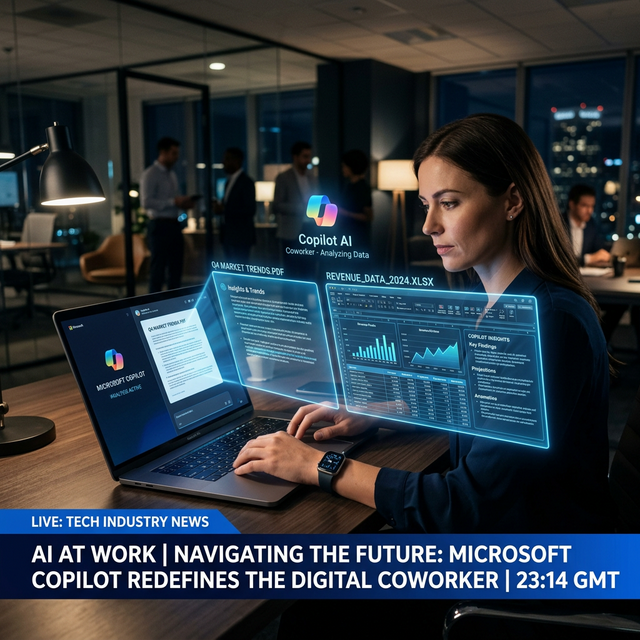
Microsoft has introduced Copilot Cowork, a new category of enterprise AI designed to do what previous AI tools could not: operate directly on the files and applications already running on your computer.
What Copilot Cowork Does
Unlike cloud-based chat assistants that respond to prompts in isolation, Copilot Cowork is designed to function as a persistent on-device collaborator. Its capabilities include:
- Reading and analyzing local files — documents, spreadsheets, presentations, and PDFs without requiring upload to the cloud
- Manipulating content — editing, reformatting, and summarizing files on behalf of the user
- Cross-application reasoning — drawing connections across multiple open documents simultaneously
- Task chaining — breaking complex multi-step requests into sequential automated actions
The “AI Coworker” Category
Microsoft’s framing is deliberate. Copilot Cowork is positioned not as a productivity add-on, but as a digital team member — one that handles the mechanical overhead of knowledge work so that human employees can focus on judgment and creativity.
This language shift matters. Describing AI as a coworker rather than a tool raises expectations significantly. It also signals Microsoft’s longer-term vision: AI agents that are persistent, contextual, and capable of taking initiative rather than waiting to be prompted.
Enterprise Implications
For IT and procurement teams, Copilot Cowork represents both an opportunity and a governance challenge. The ability to operate on local files raises questions about:
- Data residency — which content leaves the device and when
- Access controls — how organizations limit what the agent can read or modify
- Audit trails — whether human oversight can be meaningfully preserved
Microsoft has indicated that enterprise data policies will apply, but specific controls are still being detailed as the product rolls out across Microsoft 365 tenants.
Source: marketingprofs.com, devflokers.com