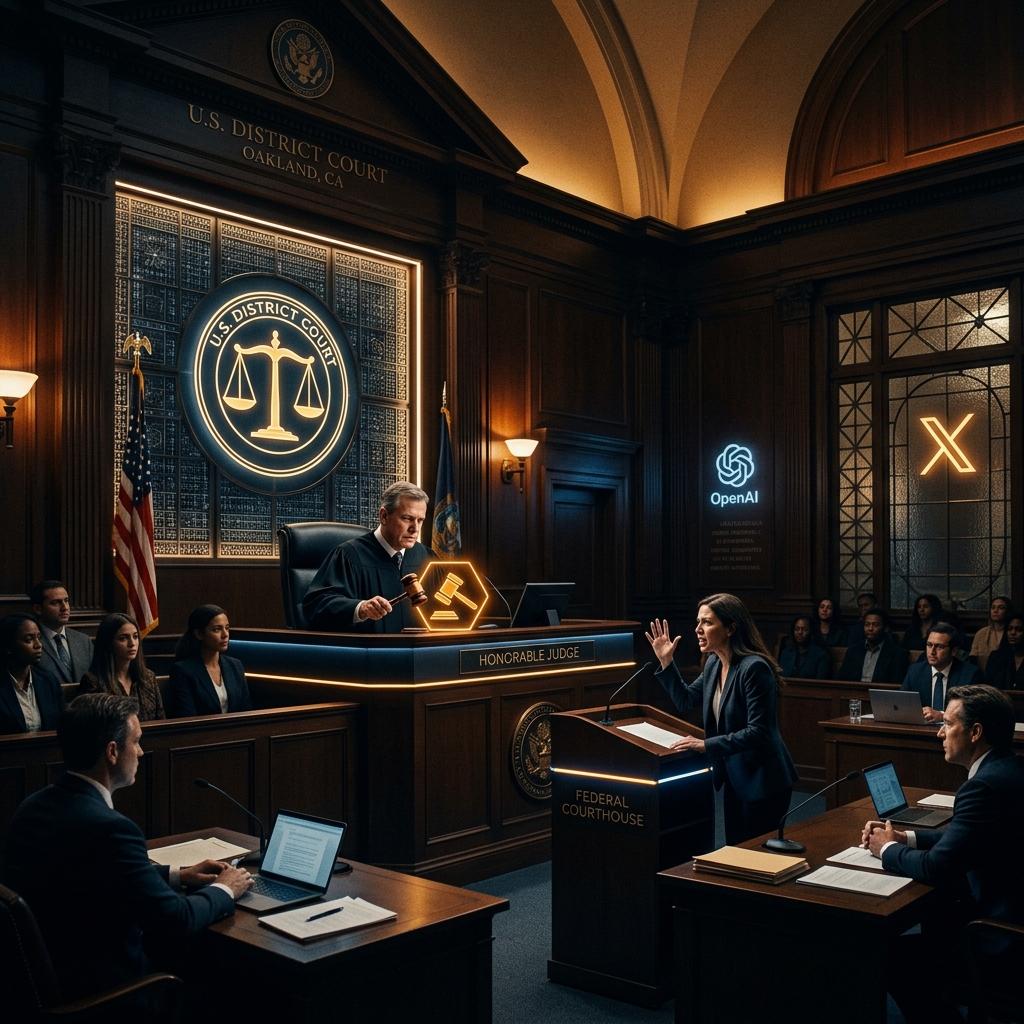
The most consequential legal battle in AI history ended not with a landmark ruling on artificial intelligence ethics — but with a procedural knockout. On May 18, 2026, a nine-person federal jury in Oakland, California, unanimously ruled against Elon Musk in his lawsuit against OpenAI, Sam Altman, and Greg Brockman, finding that his claims were filed outside the statute of limitations.
The jury deliberated for less than two hours.
The Case That Never Reached Its Merits
Musk’s lawsuit alleged that OpenAI betrayed its founding nonprofit mission by pivoting to a for-profit structure, enriching its leadership while abandoning commitments to open-source AI development. The claims struck at the heart of a fundamental tension in the AI industry: whether companies built on idealistic promises can restructure for commercial gain without accountability.
But U.S. District Judge Yvonne Gonzalez Rogers had narrowed the trial to a single threshold question — timing. The jury was asked only whether Musk knew or should have known about his claims before the statute of limitations expired. Their answer was unambiguous.
Judge Gonzalez Rogers, who served in an advisory capacity alongside the jury, immediately accepted the finding and formally dismissed all claims.
What Was Never Decided
The verdict’s most significant aspect may be what it left unresolved:
- Was OpenAI’s nonprofit-to-profit transition legitimate? — Never adjudicated
- Did Altman and Brockman unjustly enrich themselves? — Never examined
- Does OpenAI owe obligations to its founding charter? — Never tested
Legal scholars note that the statute of limitations defense effectively shielded OpenAI from what could have been a precedent-setting examination of AI governance structures.
Musk Vows Appeal
Elon Musk took to social media within hours of the verdict, declaring his intent to appeal to the Ninth Circuit Court of Appeals. His argument: the court’s procedural framing prevented the jury from ever considering the substance of his allegations.
“The court refused to let the jury hear the actual case,” Musk posted. “We will appeal.”
Legal analysts give the appeal modest chances, noting that statute of limitations defenses are rarely overturned and that appellate courts give significant deference to trial court procedural rulings.
Clearing the Path to IPO
For OpenAI, the verdict removes the single largest legal cloud hanging over its corporate future. The company has been openly preparing for a potential public offering later in 2026, and Musk’s lawsuit represented a material risk factor that would have complicated the S-1 filing.
With the dismissal:
- IPO preparations accelerate — investment banks can now proceed without the overhang of active litigation
- Corporate restructuring validated — the ruling, while procedural, signals that courts won’t easily unwind AI companies’ transitions from nonprofit to for-profit models
- Investor confidence restored — the $852 billion valuation path looks significantly clearer
The Bigger Question
While the courtroom drama is over — for now — the underlying tension remains. OpenAI was founded with explicit commitments to benefit “humanity as a whole.” Whether a company can shed those commitments through corporate restructuring without legal consequence has still never been tested on the merits.
The Musk case may be closed, but the question it raised is far from settled.
Source: theguardian.com, cbsnews.com, washingtonpost.com, pbs.org