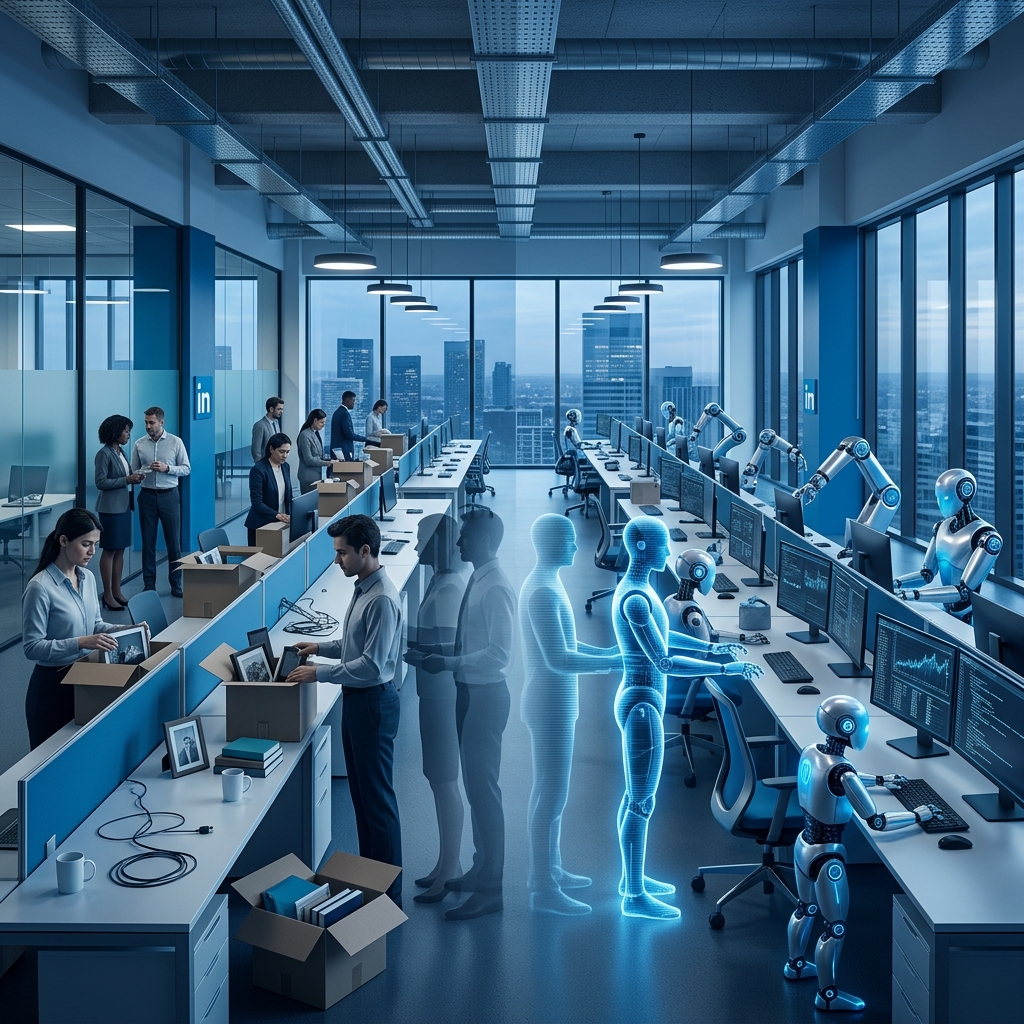
The landscape of artificial intelligence is experiencing a rapid maturation in early May 2026, transitioning decisively from passive conversational models to proactive, autonomous workflows.
The Agent-Driven Economy
At the forefront of this shift is OpenAI, which has officially positioned its latest model, GPT-5.5, as the foundational architecture for an “agent-driven economy.” Unlike previous iterations that primarily responded to user prompts, GPT-5.5 is designed natively for autonomy.
Industry analysts note that this marks a fundamental shift in how businesses will interact with AI. Rather than employing AI as an “assistant” that drafts text or generates code snippets, companies are now deploying agents capable of taking broad directives, breaking them down into constituent steps, and executing them across various software environments without continuous human oversight.
A Paradigm Shift in UX
This evolution is already reshaping user experience paradigms. The burden of interpretation is shifting from the user to the machine. We are witnessing the end of “prompt engineering” as a specialized skill; instead, users provide high-level intent, and the underlying agentic systems dynamically determine the necessary API calls, data retrieval, and logic execution required to fulfill that intent.
The Operational Reality
However, the transition to true autonomy is not without friction. As agents gain more agency, the requirements for robust system design and human-in-the-loop safeguards have become paramount. The industry is currently grappling with how to balance the massive efficiency gains of agentic workflows with the profound operational risks of unmonitored execution.
The focus has officially moved from what AI can say to what AI can do.
Source: marketingprofs.com, openai.com, techcrunch.com