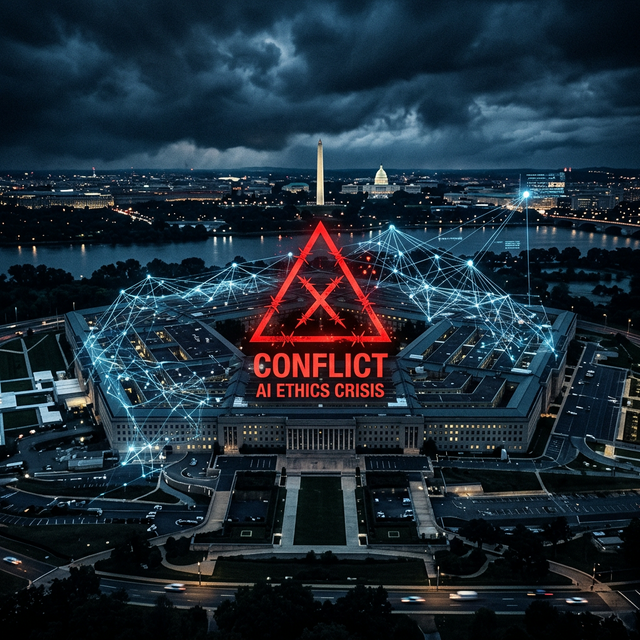
The tension between AI safety principles and government procurement reached a new flashpoint in March 2026: the US Department of Defense designated Anthropic a “supply chain risk” after the company refused to strip safety guardrails from its Claude model that prohibit its use in autonomous weaponry.
What Anthropic Refused to Do
Claude’s safety guardrails include explicit restrictions on applications that could support autonomous weapons — systems that can identify and engage targets without meaningful human oversight. Anthropic declined to remove those restrictions to satisfy a Pentagon procurement requirement.
The result: a formal government designation casting the company as a reliability risk for defense supply chains.
The Broader Debate
The case has opened a much larger conversation across the AI industry:
- Should AI companies comply with government weapons requirements to maintain strategic partnerships, or hold firm on safety principles?
- Who decides what constitutes meaningful human oversight in the loop?
- What precedent does this set for other AI labs considering government contracts?
Some companies in the space have already moved in the opposite direction — pursuing active partnerships with defense and intelligence agencies, with fewer restrictions on sensitive applications.
Why It Matters
Anthropic was founded explicitly as an AI safety counterweight — its founding principle is that building powerful AI safely, not building powerful AI quickly, should be the priority. The Pentagon conflict is perhaps the most public test of whether that mission survives contact with government procurement pressure.
Source: champaignmagazine.com