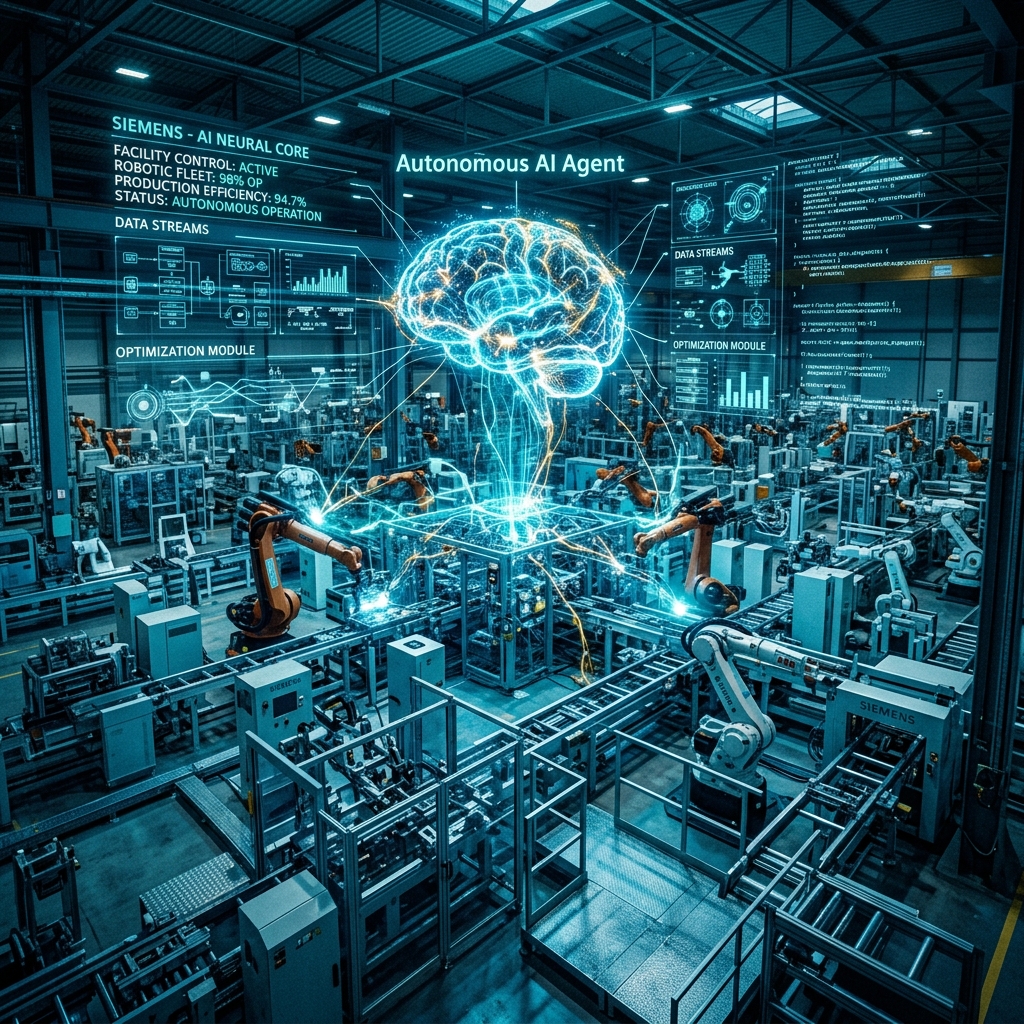
At Hannover Messe 2026, Siemens unveiled what may be the most consequential industrial AI product to date: the Eigen Engineering Agent. Backed by a €1 billion commitment to industrial AI, Eigen represents the moment AI moves from copilot to autonomous operator inside factories.
From Copilot to Autopilot
Every major tech company has built an AI copilot. Microsoft has Copilot. Google has Duet. GitHub has its coding assistant. But these are all advisory tools — they suggest, the human decides.
Eigen is different. It executes.
Operating directly within Siemens’ TIA Portal (Totally Integrated Automation), the Eigen Agent:
- Understands the full context of an industrial project
- Writes PLC automation code for manufacturing processes
- Configures hardware systems including sensors, actuators, and controllers
- Iterates and validates its own work against predefined performance benchmarks
- Only escalates to human engineers when encountering edge cases outside its training
Performance Claims
Siemens reports significant efficiency gains from pilot deployments:
| Metric | Improvement |
|---|---|
| Engineering workflow efficiency | Up to 50% reduction in time |
| Execution speed | 2–5x faster than manual processes |
| Error rate | Lower than junior engineer baselines |
The Industrial AI Stack
Eigen doesn’t exist in isolation. It’s part of Siemens’ broader vision for an “industrial AI operating system for the physical world”:
- 1,500+ AI experts across the company
- 2,000+ AI patent families protecting the technology
- Integration with the Siemens Xcelerator open digital business platform
- Access to industrial-specific training data that consumer AI companies simply don’t have
Why Consumer AI Companies Can’t Compete Here
This is the critical insight. While OpenAI, Google, and Anthropic compete in the generalist AI space, Siemens has something they don’t: decades of proprietary industrial process data. Training an AI to write code for a chatbot is one thing. Training an AI to safely configure a pharmaceutical manufacturing line or an automotive assembly robot requires domain knowledge that can’t be scraped from the internet.
The Workforce Question
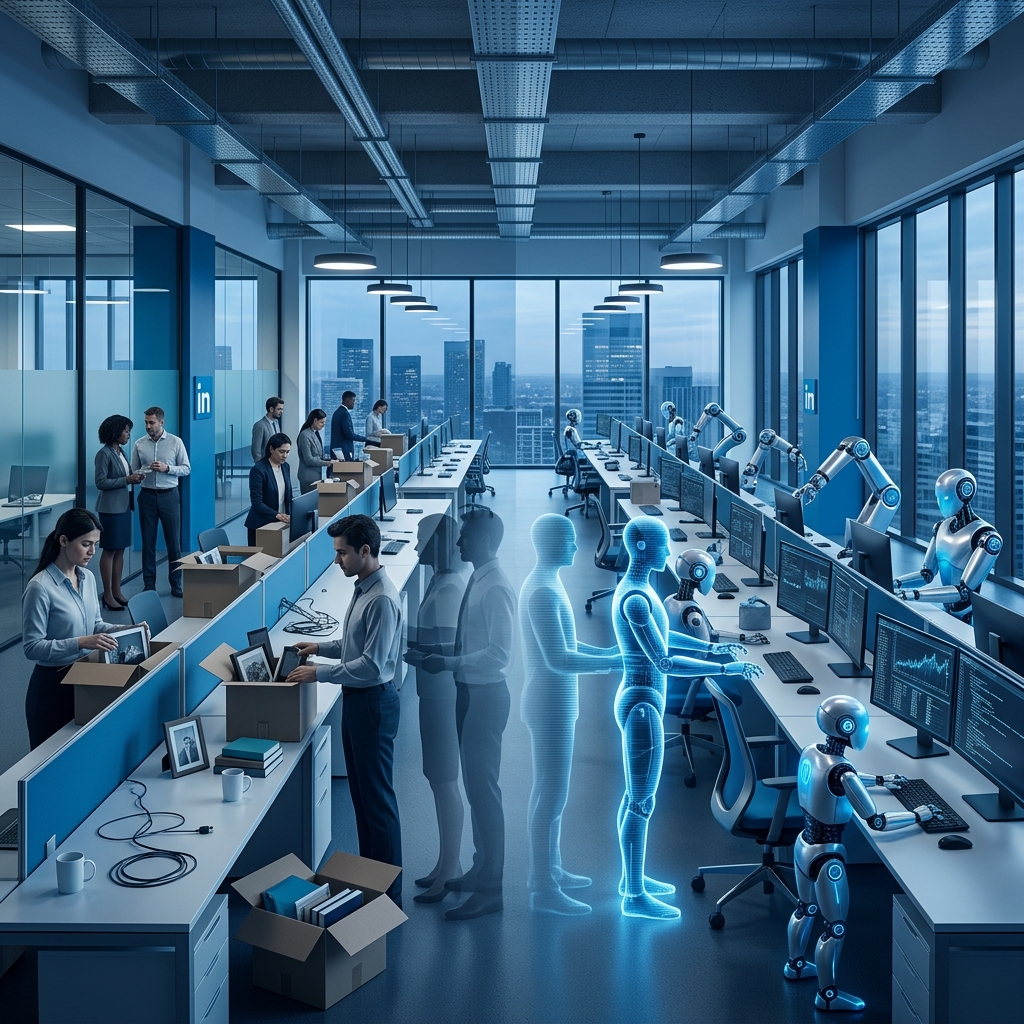
Eigen forces a difficult conversation about the future of industrial engineering. If an AI agent can write automation code faster and more accurately than a junior engineer, what happens to the traditional career ladder in manufacturing?
Siemens has been careful to frame Eigen as an “augmentation” tool, but the economic incentives are clear: companies that can configure factory automation without expanding engineering headcount will have a significant cost advantage.
Source: Siemens, Digital Engineering 247, AI News