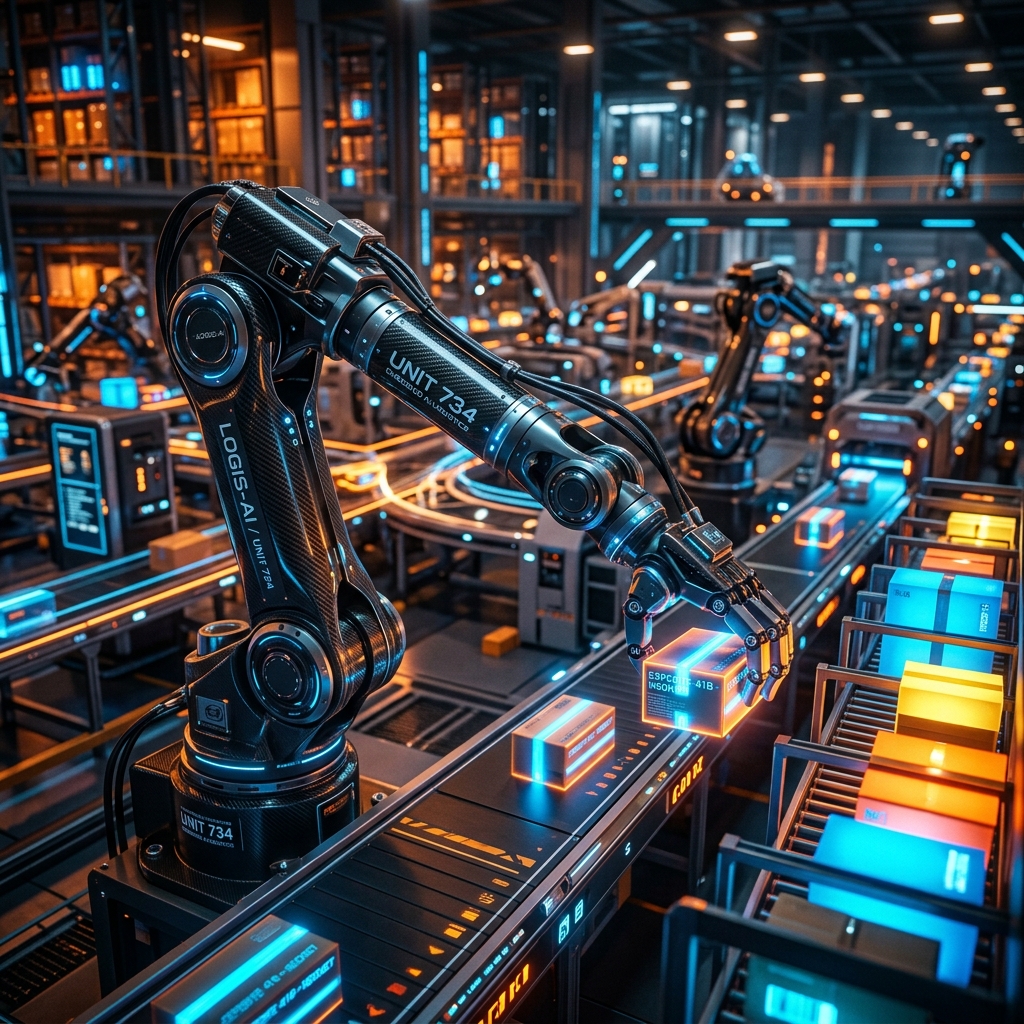
The long-promised integration of advanced artificial intelligence into physical robotics is accelerating rapidly, as “Embodied AI” moves out of research labs and onto factory floors. Major logistics and e-commerce companies have announced massive deployments of humanoid and specialized robotic systems powered by large multimodal models.
Multimodal Models in the Physical World
Unlike previous generations of robots, which relied on rigid, pre-programmed routines or highly specific computer vision models, the new wave of embodied AI utilizes general-purpose foundation models that can process visual, spatial, and linguistic data simultaneously.
This allows robots to:
- Understand ambiguous instructions: A worker can tell a robot to “move the heavy boxes near the loading dock to the staging area,” and the robot can independently identify the boxes, navigate the environment, and execute the task.
- Adapt to novel situations: If a box falls off a pallet, an embodied AI system can recognize the anomaly, assess the safest way to pick it up, and return it to the pallet without requiring manual reprogramming.
The Logistics Transformation
Companies like Amazon, Maersk, and FedEx are testing these systems to handle “long-tail” logistics tasks—jobs that are too variable for traditional automation but increasingly difficult to staff with human labor.
“We are seeing a paradigm shift where we no longer program robots; we simply instruct them and let the onboard AI figure out the physics and the pathing,” stated the CTO of a major robotics startup.
The rapid deployment of these systems suggests that supply chain automation is on the verge of a massive leap forward, though labor unions and policymakers are raising urgent questions regarding workforce displacement.