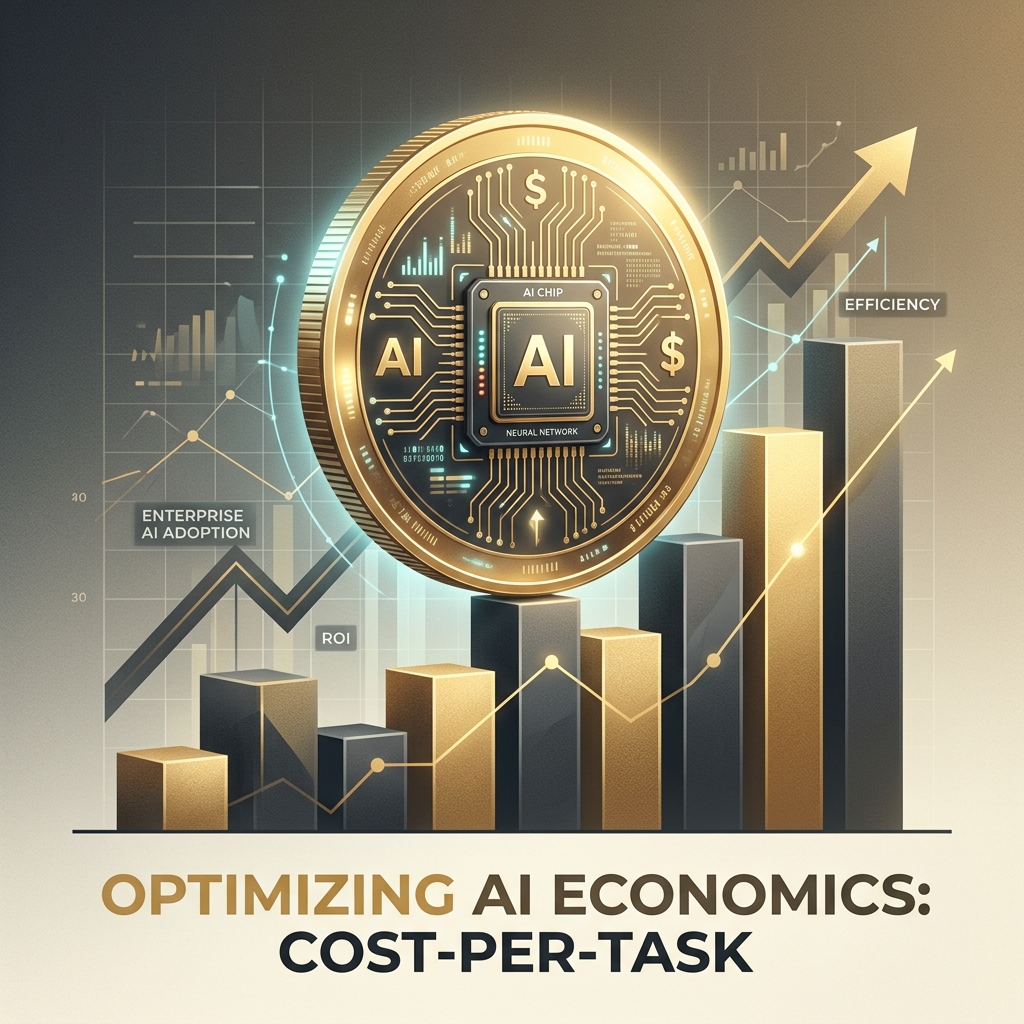
The “AI tourist” phase of enterprise adoption is officially over. Following years of massive, often unmeasured investments in generative AI pilots, Chief Financial Officers (CFOs) are demanding concrete returns, shifting the industry’s focus toward “cost-per-task” economics.
The End of Hype-Driven Spending
In 2024 and 2025, companies eagerly signed massive enterprise agreements with major AI providers simply to “figure out how to use AI.” Now, those contracts are up for renewal, and the scrutiny is intense.
According to a new report from Gartner, 65% of enterprise AI pilots launched in the last two years have failed to scale into production, primarily because the cost of running the massive models far outweighed the value of the specific task being automated.
The Rise of Small, Specialized Models
This economic reality is driving a massive shift in how AI is deployed. Instead of using massive, trillion-parameter frontier models for every task, enterprises are adopting a “right-sizing” approach:
- Routing: Using intelligent routers to send simple queries (like summarizing an internal document) to cheap, fast, open-source models (like Llama 4 8B or Mistral).
- Specialization: Fine-tuning smaller models for highly specific tasks (e.g., extracting data from invoices), which often outperform frontier models on that specific task while costing a fraction of a cent per API call.
- Reserving Power: Saving the expensive, highly capable models (like GPT-5.5 or Claude Mythos) strictly for complex reasoning and agentic workflows that justify the high cost.
The New Metric
The new metric for AI success is no longer “How smart is the model?” but rather, “What is the precise cost to automate this specific business process, and what is the margin improvement?” AI providers that cannot demonstrate clear cost-per-task advantages are increasingly finding themselves locked out of lucrative enterprise renewals.
Source: gartner.com, forbes.com