IBM and the University of Illinois Urbana-Champaign have announced a major expansion of the IBM-Illinois Discovery Accelerator Institute, a research collaboration originally launched in 2021 that has already produced over 230 research publications.
Quantum Meets Classical
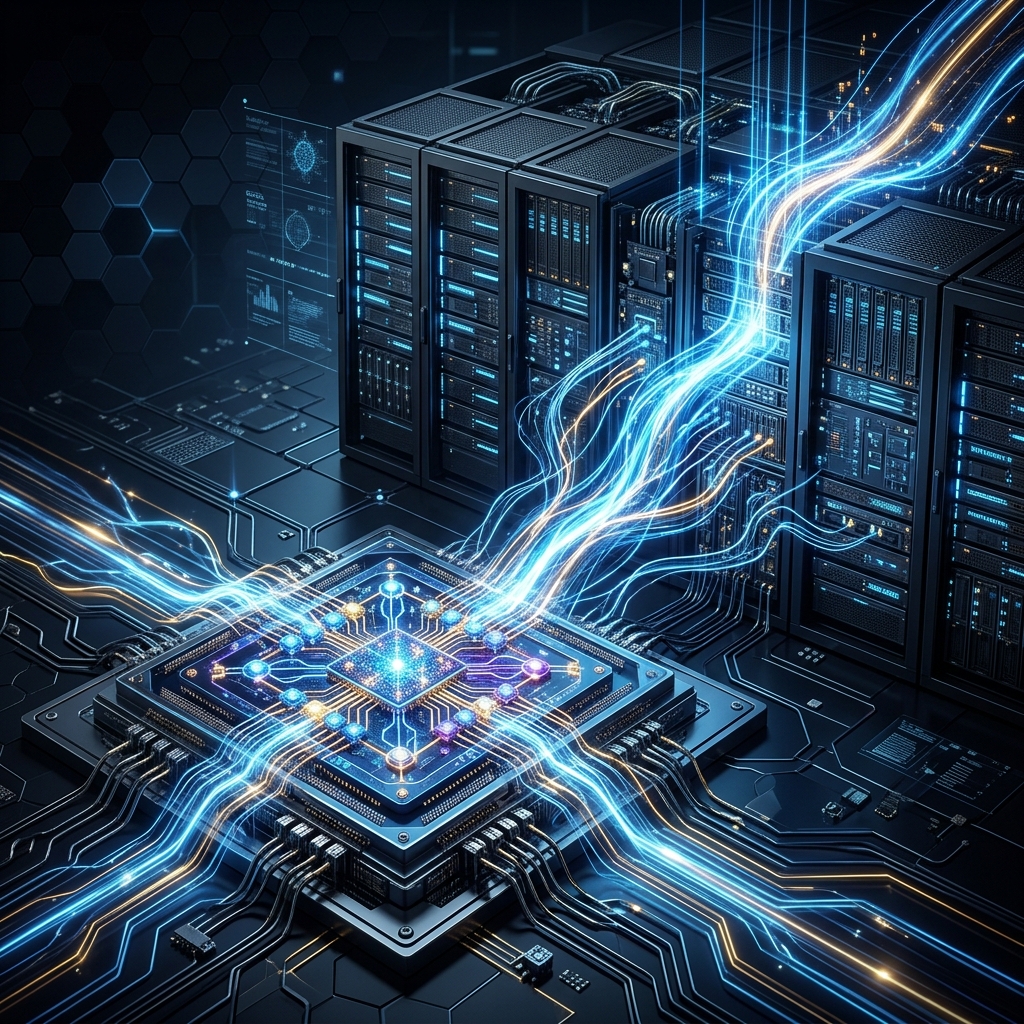
The centrepiece of the expansion is a plan to deploy quantum-centric supercomputing by integrating IBM’s quantum computers with the university’s NCSA Delta and DeltaAI supercomputers. The goal: create hybrid workflows where quantum and classical resources are used together to tackle problems that neither can solve alone.
Five-Year Research Agenda
The renewed Institute will focus on four core areas over the next five years:
- Quantum-Centric Supercomputing Architecture — developing new system designs that combine the strengths of quantum and classical processors
- AI Systems — tackling challenges in efficient, scalable distributed inference for next-generation AI workloads
- Algorithms-to-Silicon-to-Systems (AS2) — accelerating the pipeline from algorithm design to silicon implementation for specialised computing
- Workflow Management — building tools to seamlessly connect IBM’s cloud-based quantum computers with NCSA’s on-premises supercomputing resources
Why It Matters
The quantum-AI intersection is one of the most consequential — and most speculative — areas in computing research. While practical quantum advantage for AI workloads remains years away, this partnership is building the foundational infrastructure that such breakthroughs would require.
With 230+ publications already published, the Institute has proven it can produce real research output, not just press releases. The question now is whether the next five years can deliver the hybrid quantum-classical systems that would make quantum computing genuinely useful for training and inference.
For the AI industry, the bet is that quantum computing could eventually break through current scaling walls in model training — offering exponential speedups for specific classes of problems that classical hardware grinds through linearly.
Source: ibm.com, cbsnews.com