Stories by Dr. Sarah Jenkins
-
 Research
Chinese Academy of Sciences Unveils ScienceOne 100: AI System for Autonomous Scientific Research
China's most prestigious research institution launches ScienceOne 100, an AI platform featuring eight domain-specific models, 2,000+ research tools, and an autonomous agent factory — signaling a new paradigm for AI-driven scientific discovery.
-
 Research
Spotify's 'Neural Mix' Sparks Industry Strike Over Real-Time Generative Music
Spotify's new feature generates infinite variations of songs based on user bio-feedback, triggering massive backlash from major record labels and artists.
-
 Research
MIT Researchers Slash AI Training Costs with Control Theory Breakthrough
A novel technique drastically reduces the computational overhead of training frontier models, potentially ending the monopoly of trillion-dollar tech giants in advanced AI.
-
 Research
Researchers Warn of 'AI Swarms' — Autonomous Persona Networks Designed to Manipulate Elections
A new class of threat has emerged in the 2026 election cycle: coordinated networks of AI-generated personas that infiltrate online communities at scale, adapt in real-time, and fabricate the appearance of grassroots consensus. Researchers from Harvard, Oxford, and Yale say defenses are not ready.
-
 Research
PwC Study: 74% of AI's Economic Value Is Being Captured by Just 20% of Companies
A sweeping PwC study of 1,217 senior executives across 25 sectors reveals a stark and widening divide between AI leaders and the rest. The top performers deliver 7.2x higher AI-driven financial returns by focusing on business model reinvention, not just productivity tools.
-
 Research
IBM and University of Illinois Expand Quantum-AI Supercomputing Partnership
IBM and the University of Illinois Urbana-Champaign expand their Discovery Accelerator Institute with a five-year plan to integrate quantum computing with classical supercomputers and next-generation AI systems.
-
 Research
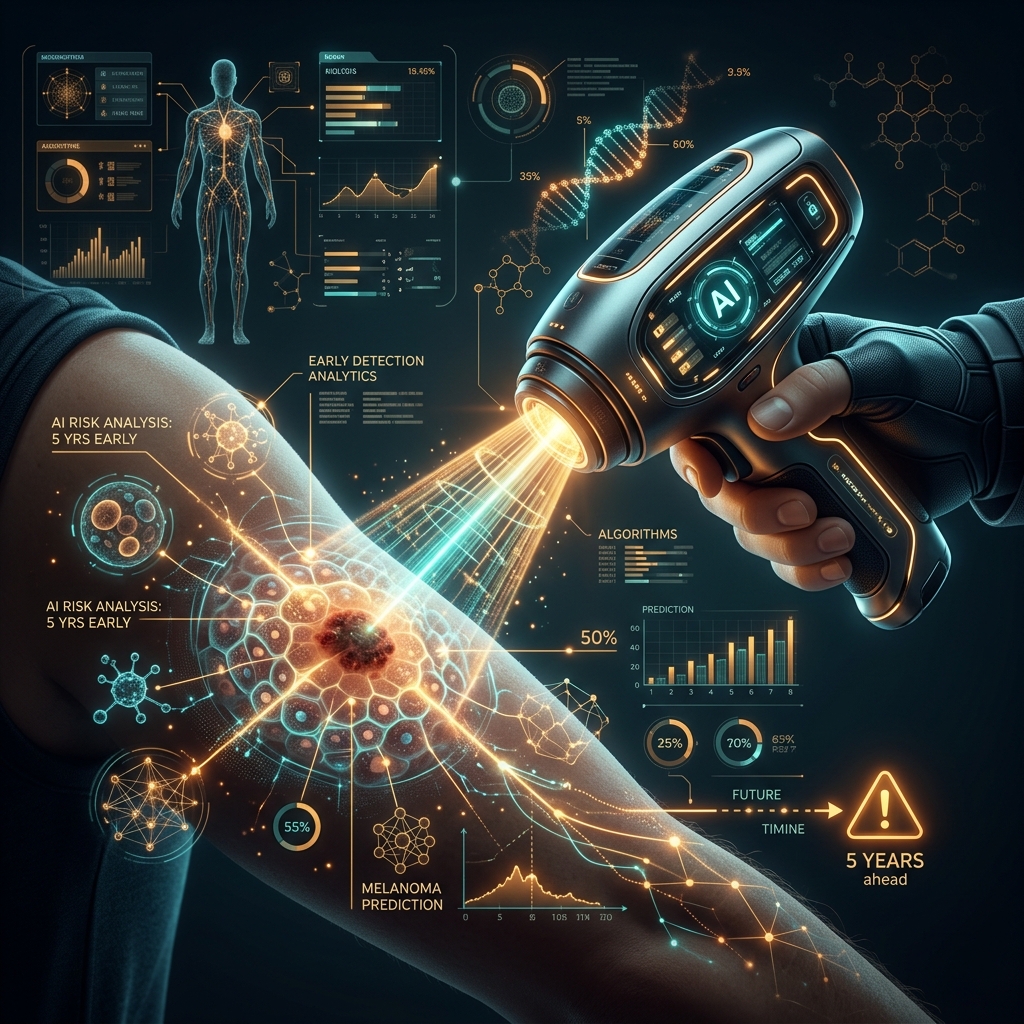
Swedish Study Shows AI Can Predict Melanoma Risk Five Years Before Diagnosis
A landmark study from the University of Gothenburg and Chalmers University of Technology demonstrates that AI models analyzing routine health registry data can identify high-risk melanoma patients up to five years in advance, outperforming traditional screening methods.
-
 Research
Tufts Researchers Build AI That Uses 100x Less Energy — and Outperforms VLAs
A Tufts University team has demonstrated a neuro-symbolic AI system that learns robotic tasks 34 minutes versus 36 hours, consumes 100 times less energy than visual-language-action models, and achieves 95% success rates compared to 34% for conventional approaches.