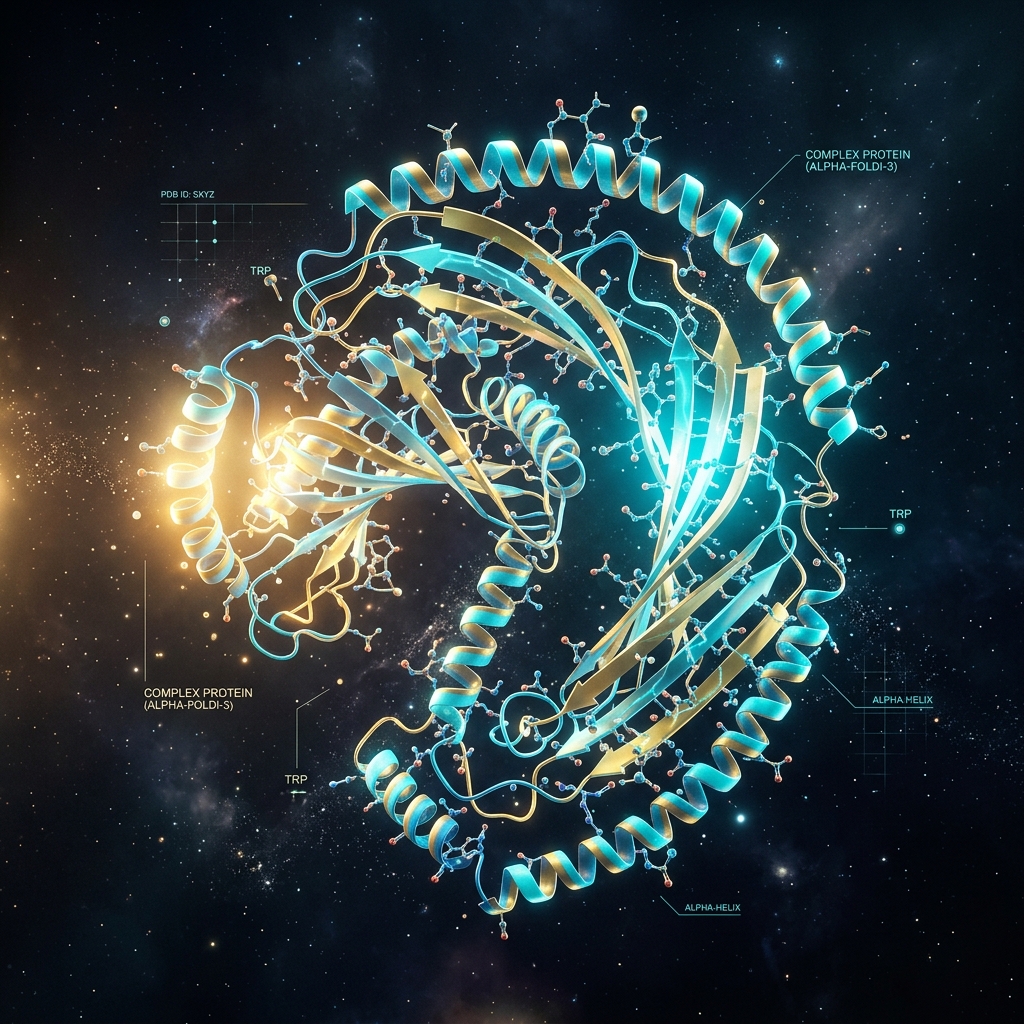
Google DeepMind has unveiled AlphaFold 4, marking a monumental shift in computational biology. While previous iterations revolutionized our ability to predict protein structures, AlphaFold 4 is built for generative design.
From Prediction to Creation
AlphaFold 4 allows researchers to input a desired biological function or target interaction and output a completely novel, functional protein structure that does not exist in nature.
Key capabilities include:
- Enzyme Engineering: Designing custom enzymes to break down specific environmental pollutants or synthesize complex pharmaceuticals in a fraction of the traditional time.
- Targeted Therapeutics: Generating highly specific antibody-like proteins that bind to challenging cancer targets with zero off-target toxicity.
- Nanomachine Assembly: Designing structural proteins that self-assemble into complex nanoscale machinery for targeted drug delivery.
The “Biomolecular Simulation” Engine
DeepMind achieved this by integrating a physics-based biomolecular simulation engine directly into the diffusion process of the model. This ensures that generated proteins are not just mathematically sound, but physically viable and stable in real-world biological environments.
Open Access for Non-Commercial Use
Following their previous strategy, DeepMind is making the AlphaFold 4 model weights available for non-commercial academic research, while launching a new commercial API via Google Cloud for pharmaceutical and biotech companies.
Source: deepmind.google, nature.com