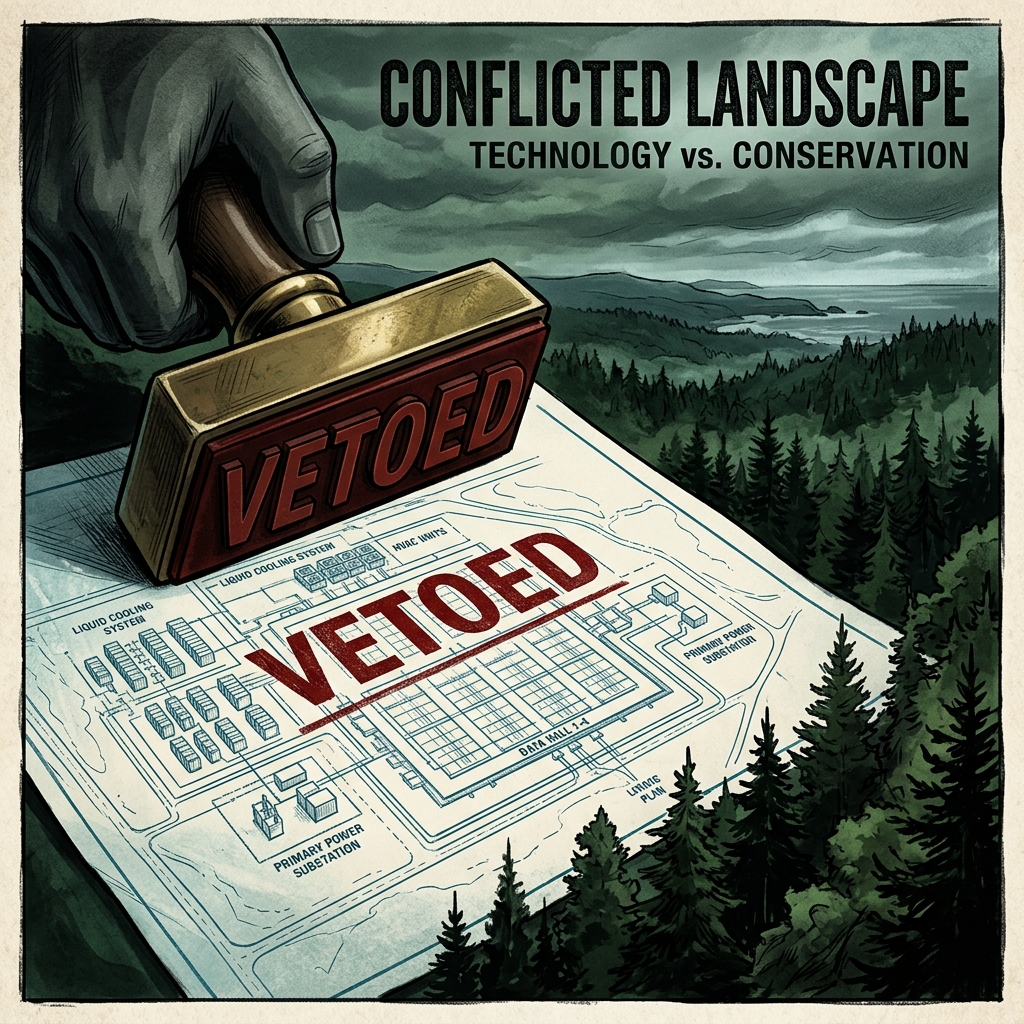
Maine Governor Janet Mills has vetoed what would have been the first statewide moratorium on large AI data centers in the United States. The bill, which had passed both chambers of the state legislature with bipartisan support, sought to pause the construction of data centers exceeding 50,000 square feet until environmental and energy impact studies could be completed.
Why the Veto
The governor’s stated reason was narrow but revealing: the bill lacked an exemption for a specific data center project already under development in the town of Jay, Maine. The Jay project, backed by a consortium of investors and expected to bring several hundred jobs to the economically struggling mill town, would have been halted by the moratorium.
Mills framed her decision as protecting local economic development rather than opposing the bill’s environmental goals. In her veto statement, she invited legislators to reintroduce the bill with the Jay exemption included.
The Broader Debate
Maine’s struggle reflects a tension playing out across the United States: communities want the economic benefits of data center construction — jobs, tax revenue, infrastructure investment — but increasingly fear the environmental consequences:
- Energy consumption: Large AI data centers can consume as much electricity as a small city, straining local grids and potentially raising energy costs for residents
- Water usage: Cooling systems for GPU clusters require massive water withdrawals, a growing concern in regions already facing water stress
- Land use: The footprint of modern AI data centers, including associated power infrastructure, can transform rural landscapes
What Happens Next
The veto doesn’t kill the idea — it delays it. Legislators have indicated they will reintroduce the bill with a carve-out for the Jay project. But the episode illustrates the political complexity of AI infrastructure policy: even when there’s broad agreement that large-scale data center development needs guardrails, local economic interests can override environmental caution.
Other states are watching closely. Virginia, Texas, and Georgia — all major data center hubs — are facing similar debates about the pace and scale of AI infrastructure expansion.
The Paradox
There’s an irony at the heart of this story: the AI industry’s voracious demand for compute is creating infrastructure challenges that may ultimately require AI itself to solve — from optimizing energy grids to designing more efficient cooling systems. The question is whether the buildout happens responsibly or whether the race for compute capacity outpaces the governance frameworks meant to manage it.
Source: democracynow.org, bangordailynews.com