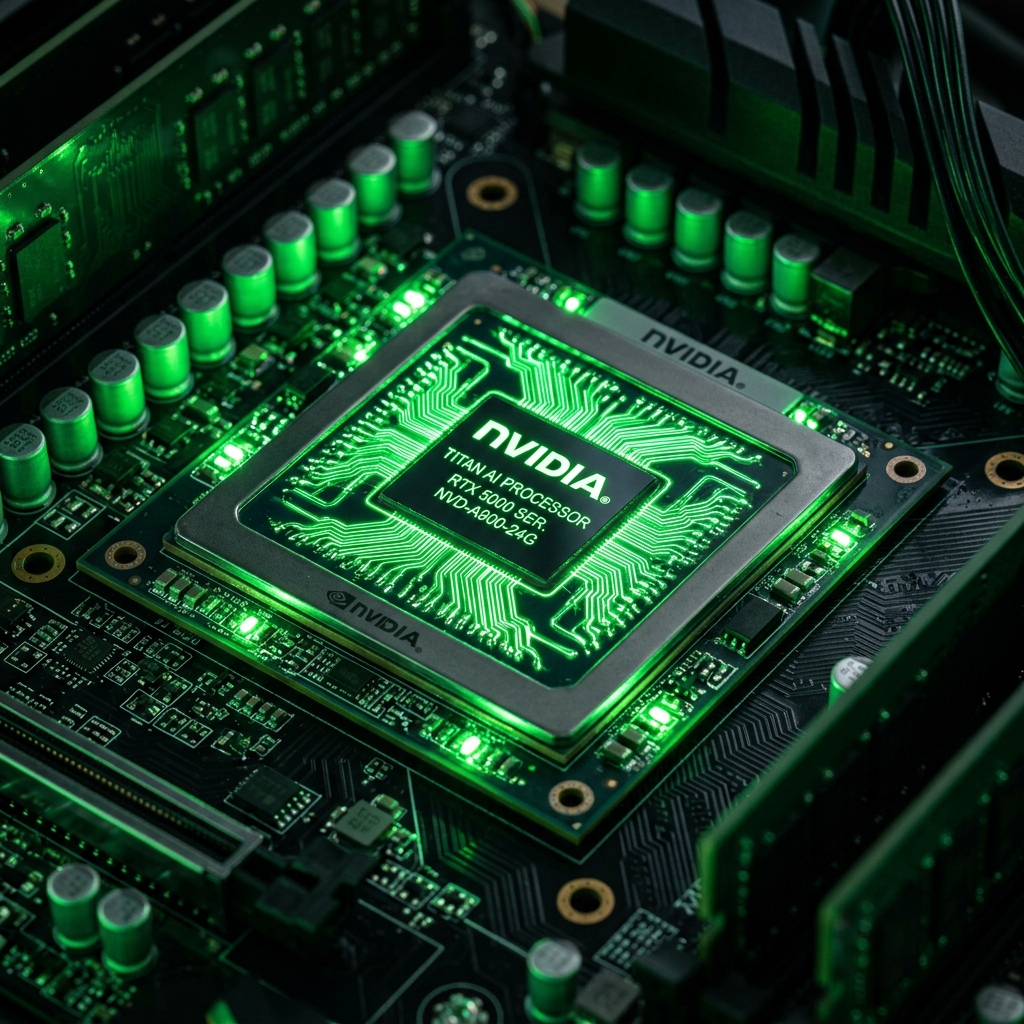
Nvidia CEO Jensen Huang surprised the tech world today by unveiling the highly anticipated “Rubin” GPU architecture a full quarter ahead of schedule, signaling the company’s aggressive push to maintain its dominance in the AI hardware market.
The Memory Bandwidth Revolution
Named after the pioneering astronomer Vera Rubin, the new architecture addresses the most critical bottleneck in AI training and inference: memory bandwidth.
The Rubin chips utilize the brand-new HBM4 (High Bandwidth Memory 4) standard, integrating the memory directly onto the logic die using advanced 3D packaging. This results in a staggering 3x increase in memory bandwidth compared to the previous Blackwell generation.
Agentic AI Optimization
Huang emphasized that Rubin was designed specifically for the era of “Agentic AI” and multi-modal continuous learning.
- Native MoE Acceleration: The architecture features dedicated hardware blocks specifically optimized for routing within massive Mixture of Experts models.
- Energy Efficiency: Despite the massive performance leap, Rubin boasts a 40% reduction in energy consumption per token generated, a crucial metric as data center power grids reach their limits globally.
The Market Reaction
Nvidia’s announcement immediately impacted the stock market, sending shares up 4% in after-hours trading. The accelerated timeline puts immense pressure on competitors like AMD and custom silicon efforts from hyperscalers (Google TPU, AWS Trainium), proving that Nvidia has no intention of slowing its relentless innovation cycle.
Source: nvidia.com, cnbc.com